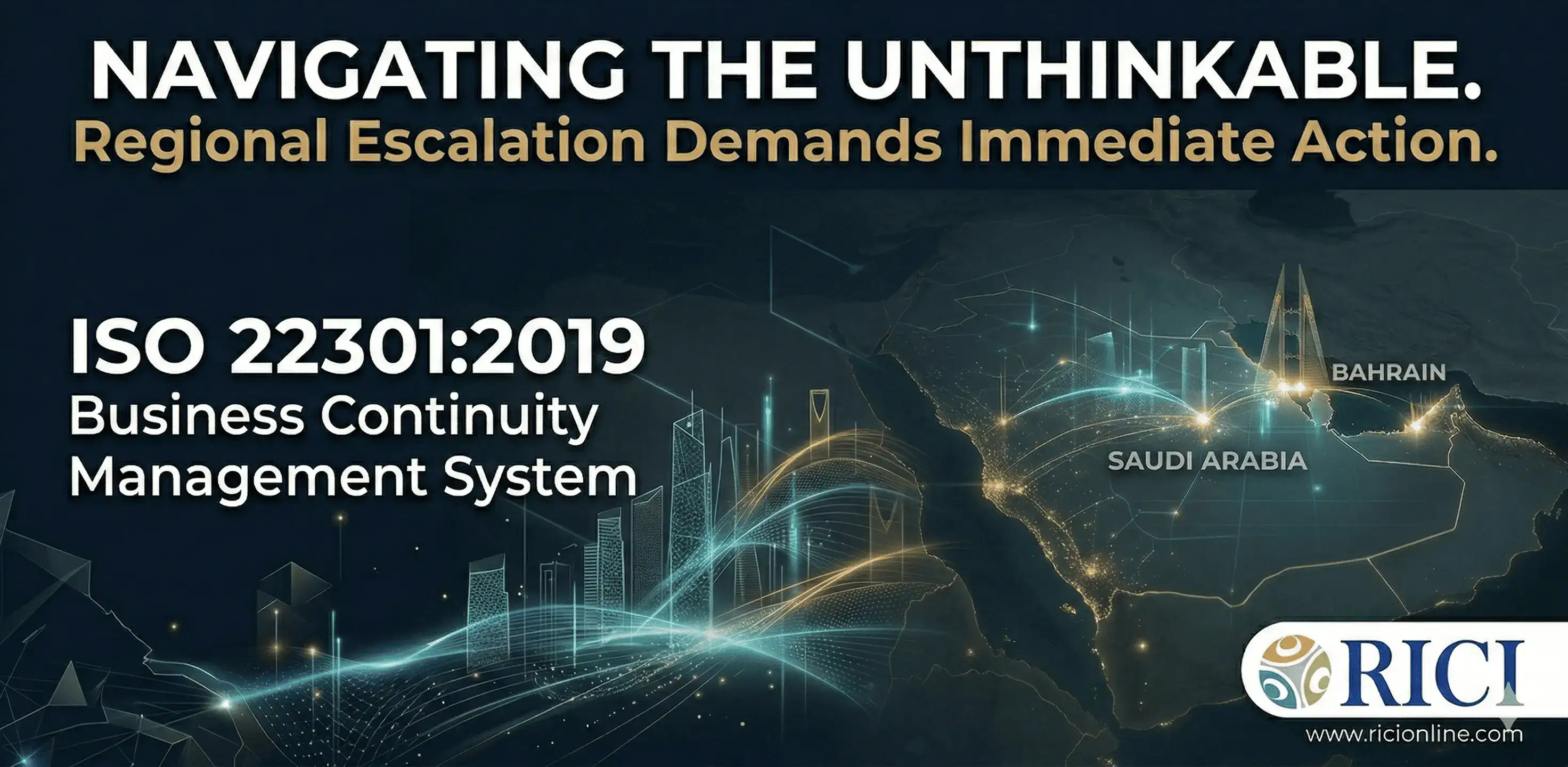
Navigating the Unthinkable: Securing Business Continuity in KSA and Bahrain Amidst Regional Conflict
2-Mar-2026
Navigating the Unthinkable: Securing Business Continuity in KSA and Bahrain Amidst Regional Conflict
The events unfolding over the past few days have instantly shifted the concept of "crisis management" from a theoretical boardroom exercise to an immediate, real-world necessity. With the sudden escalation of direct conflict involving Iran, and subsequent retaliatory missile and drone strikes impacting both military and civilian areas across the Gulf, businesses are facing an unprecedented operational test.
When airspace abruptly closes, sirens sound in cities like Manama, Dubai, Riyadh, and regional supply chains are paralyzed overnight, organizations cannot afford to rely on ad-hoc reactions. The current security environment demands a structured, ironclad approach to operational survival.
The Acute Pressures on Saudi Arabia and Bahrain
While the entire GCC is navigating this shockwave, the impacts on Saudi Arabia and Bahrain present distinct vulnerabilities that require immediate continuity strategies.
Saudi Arabia: The recent strikes targeting the capital, Riyadh, and the Eastern region represent a direct challenge to the Kingdom's economic engines. For organizations driving massive Vision 2030 infrastructure projects, managing sprawling logistics networks, or providing local services, disruptions to workforce safety and material flow can cause immediate, compounding losses. Furthermore, strict regulatory bodies demand that businesses maintain resilience even under extreme regional duress.
Bahrain: As a premier financial hub and an island nation hosting critical international naval infrastructure, Bahrain is highly sensitive to geopolitical shocks. The strikes reported near Manama highlight the fragility of operations that rely on concentrated logistical routes and uninterrupted digital connectivity. For Bahraini enterprises, demonstrating absolute operational stability right now is vital to preventing capital flight and maintaining global investor confidence.
Why ISO 22301:2019 is Your Survival Framework
In a highly volatile environment where the next 24 hours are unpredictable, ISO 22301:2019 Business Continuity Management System (BCMS) certification is the critical differentiator between organizations that fracture under pressure and those that endure.
This is not just about compliance; it is about establishing a battle-tested blueprint for survival:
Rapid Incident Response: The framework ensures you have pre-tested protocols to instantly activate emergency measures, prioritizing the physical safety of your personnel while simultaneously locking down and securing critical data and assets.
Supply Chain Redundancy: Through rigorous Business Impact Analysis (BIA), ISO 22301 forces organizations to identify their absolute critical dependencies and establish immediate, viable workarounds when primary transit routes or airspace are suddenly restricted.
Global Stakeholder Assurance: In a region currently making global headlines for active conflict, holding an internationally recognized certification proves to your international partners, clients, and regulators that your operations are systematically fortified against the current chaos.
Build Unshakeable Resilience with RICI
The current escalation is a harsh reminder that you cannot build a shelter while the storm is already overhead. You must solidify your foundations now.
At RICI, our auditors and continuity experts understand the specific, immediate realities facing businesses on the ground in Saudi Arabia and Bahrain today. Our ISO 22301:2019 certification and training services go beyond standard compliance. They are designed to rigorously stress-test your organization against the very real threats unfolding in our region.
Secure your operations. Protect your people. Guarantee your continuity. Reach out to RICI today to learn how we can help you fortify your business and ensure you remain operational, no matter what tomorrow brings.
Related Blogs


Get Certified with International Standards
If your organization is looking to get certified for international standards relevant to your business, we can assess and assist you. ✅
Send Your Inquiry